
Table of Contents
- Why Gratitude Matters for Kids (and What Most Parents Get Wrong)
- Start With Modeling: How Parents Teach Gratitude Without Saying a Word
- Gratitude Activities for Kids That Fit Real Family Life
- Gratitude Journal Prompts for Children by Age Group
- Gratitude Scripts for Parents: What to Say When Kids Feel Entitled
- How to Stop Entitlement in Kids Without Shame or Lectures
- Gratitude During Hard Seasons: Transitions, Setbacks, and Neurodivergent Kids
- Frequently Asked Questions
Last Updated: September 15, 2026
Why Gratitude Matters for Kids (and What Most Parents Get Wrong)
Gratitude is noticing and appreciating what you have rather than what you lack. Learning how to teach kids about gratitude early builds emotional intelligence, resilience, and contentment that last beyond childhood. At Real Life Learning Co, we believe that parents who succeed don’t lecture about thankfulness, they build small, repeatable moments into ordinary days. Most guides get this wrong by treating gratitude as a lesson to deliver rather than a habit to model, so kids parrot “thank you” without feeling thankful.
A common mistake is saving gratitude talks for Thanksgiving or birthdays, when the real work happens in quiet, unremarkable moments. Entitlement rarely comes from too much stuff, it comes from too little practice noticing what’s already there.
Start With Modeling: How Parents Teach Gratitude Without Saying a Word
Here’s what this looks like in practice:
- Narrate your own appreciation out loud, even about small things
- Thank your kids specifically, not just generally (“Thanks for putting your shoes away without being asked”)
- Let them hear you express thanks to other adults, including service workers and family members
- Avoid complaining about what you don’t have in front of them
Try a “one good thing” moment at the dinner table where every person shares something they appreciated that day. Kids copy the format long before they understand the concept.
Gratitude Activities for Kids That Fit Real Family Life
The best gratitude activities for kids survive a busy Tuesday.
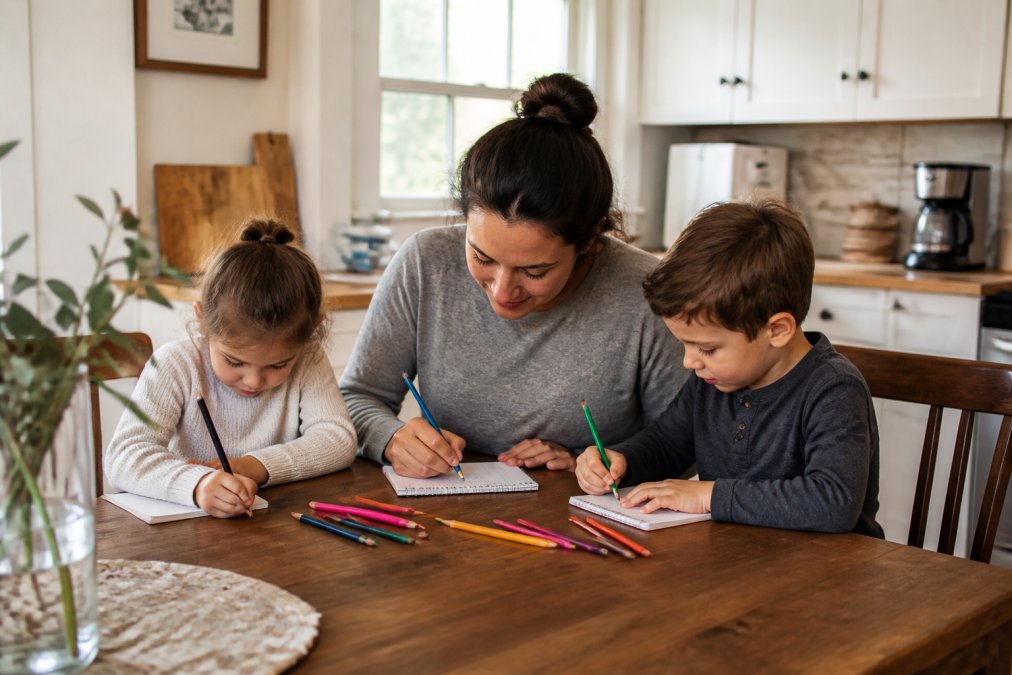
Everyday Moments: Meals, Car Rides, and Bedtime
You don’t need a dedicated gratitude hour, just three minutes in places you’re already sitting still.
Interactive Family Rituals That Make Gratitude Stick
Rituals give gratitude a shape kids remember: a gratitude jar where everyone drops in a weekly note, a “thankful Thursday” where each person writes one sentence about someone else, or a bedtime round-robin where everyone thanks one family member.
Gratitude Journal Prompts for Children by Age Group
| Age Group | Prompt Style | Why It Works | Example Prompts |
|---|---|---|---|
| Ages 4-6 | Simple, sensory, one-word answers | Concrete thinking dominates; kids this age anchor to what they can see, touch, or remember from the last few hours | “What made you smile today?” “Who gave you a hug?” “What was your favorite thing you ate?” |
| Ages 7-9 | Short sentences, specific people | Theory of mind is developing; kids can now imagine another person’s experience, which makes “who helped you” land | “Who helped you this week?” “What’s something you’re good at?” “What did someone do that surprised you?” |
| Ages 10-12 | Reflection, perspective-taking | Abstract reasoning is coming online; kids can compare their life to someone else’s without it turning into guilt | “What’s something hard that taught you something?” “Who do you appreciate and why?” “What’s something you have that you didn’t earn?” |
| Ages 13+ | Deeper reflection, values | Identity formation is the developmental task; prompts that connect gratitude to who they’re becoming get more traction than prompts about stuff | “What’s something you have that others might not?” “When did you feel most grateful this week?” “Who has shaped the person you’re becoming?” |
How to Set Up the Journal So It Actually Gets Used
- Keep it visible. A small notebook on the nightstand or kitchen counter beats a beautiful leather journal in a drawer.
- Pair it with an existing habit. Bedtime, after-school snack, or the drive to practice, anchor the journal to something that already happens daily.
- Let them choose the format. Some kids want to write. Some want to draw. Some want to dictate to you while you write. All three count.
- Don’t correct spelling or grammar. The moment it feels like schoolwork, it stops being gratitude practice.
- Two minutes is the ceiling, not the floor. A single sentence is a complete entry.
For kids who resist writing, try a “gratitude photo roll” instead. Once a week, have them scroll through your phone’s camera roll and pick one photo that made them happy. The act of noticing is the same, the medium is just different.
The goal isn’t a perfect journal. It’s a daily pause where your child’s brain practices noticing what’s good. Consistency beats depth every time, and a two-minute entry that happens daily outperforms a twenty-minute entry that happens twice a month.
Gratitude Scripts for Parents: What to Say When Kids Feel Entitled
Try these scripts:
- “I hear that you want that. Let’s talk about what we already have that you love.”
- “It’s okay to want things. It’s also good to notice what you already have.”
- “That person worked hard to make this for us. What could we say to them?”
- “I wonder how someone else might feel in this situation.”
How to Stop Entitlement in Kids Without Shame or Lectures
Three approaches work better than lectures:
- Delayed gratification. Let kids wait for things they want. Waiting builds appreciation for what arrives. A common pattern is to stretch the wait by age: a 5-year-old can wait a day for a small treat, a 10-year-old can save toward a goal over several weeks, and a teenager can manage a longer savings target. The mechanism is simple, the brain assigns more value to something it had to work or wait for.
- Contribution. Give kids real responsibilities at home. Not chore charts with stickers, actual contributions the household depends on. A 6-year-old can set the table. A 9-year-old can walk the dog. A 13-year-old can plan and cook one dinner a week. Contributing builds ownership and quietly dismantles the “I deserve” mindset, because the child becomes a producer rather than only a consumer.
- Perspective-taking. Talk about how others experience the world. Ask questions instead of making statements. “What do you think the cashier’s day was like?” lands better than “You should be grateful that cashier has a job.” Questions invite the child to build the perspective themselves, which is the only way it sticks.
The Digital Entitlement Problem Nobody Talks About
What actually helps:
- Name the mechanism out loud. Tell your child, in plain language, that social feeds show highlights and hide everything else. Kids as young as 8 can understand this once it’s pointed out, and once they see it, they can’t unsee it.
- Create friction around wants. If your child sees something on a screen and wants it immediately, build in a 48-hour rule. They write it down, wait two days, and then decide. Most wants evaporate. The ones that survive are worth talking about.
- Protect unstructured, unglamorous time. Boredom is where appreciation grows. A kid who has nothing to do for an afternoon eventually notices the tree in the backyard, the dog on the couch, the book on the shelf. A kid with a screen never has to.
- Model it yourself. If you scroll at dinner, they will too. If you narrate your own comparison traps (“I saw someone’s vacation photos and felt a little jealous, then I remembered we had a great weekend at home”), you give them language for their own experience.
- Do a family “unplugged hour” once a week. No screens, no exceptions. It’s not about punishment. It’s about giving everyone’s attention a chance to land on something real.
Avoid the trap of tying gratitude to guilt. Saying “there are children who have nothing” rarely creates thankfulness. It creates anxiety, and anxious kids don’t feel grateful, they feel scared. Focus on what your child has, not on what others lack.
If your child is stuck in comparison mode, try a “real vs. reel” dinner conversation. Each person shares one thing they saw online that looked perfect, and one true thing about their own day that wasn’t. It builds the habit of noticing the gap between the two.
Gratitude During Hard Seasons: Transitions, Setbacks, and Neurodivergent Kids
During hard seasons, shrink the practice. One sentence at bedtime is enough. Gratitude isn’t a performance. It’s a small light you keep on.
Frequently Asked Questions
How do you explain gratitude to a young child?
Use concrete language and everyday examples. Tell your child that gratitude is noticing something good and feeling thankful for it, then point to specific things: the warm sun on their face, a friend who shared a snack, a grandparent who called. For kids under six, abstract definitions won’t land. Instead, ask questions like ‘What made you smile today?’ or ‘Who helped you today?’ Pair the words with actions, like saying thank you out loud or drawing a picture for someone. Over time, these small moments build the vocabulary and the feeling behind gratitude.
At what age should you start teaching children about gratitude?
You can begin planting seeds as early as age two or three by modeling thankfulness and narrating your own gratitude out loud. Between ages four and seven, kids can start participating in simple gratitude activities like naming one good thing before bed. By ages eight to twelve, they can handle gratitude journal prompts for children that ask deeper questions, like who they appreciate and why. The key is matching the method to their developmental stage, not waiting for a ‘perfect’ age to start.
How do you handle entitlement while teaching gratitude?
Separate the behavior from the child. When kids demand or expect things, respond calmly with a script like, ‘I hear that you want that. Let’s talk about what we already have.’ Pair limits with perspective-taking: volunteer together, talk about how other families live, and practice waiting for things they want. Avoid shaming phrases like ‘You should be grateful.’ Instead, build daily habits, such as a gratitude journal or a dinner ritual, that make thankfulness a normal part of family life rather than a punishment for complaining.
What are 5 simple ways families can practice daily gratitude?
Try these five habits: one, share one thing you’re thankful for at dinner each night. Two, keep a family gratitude jar where anyone can drop in a note. Three, do a bedtime round-robin where each person names something good from the day. Four, write one thank-you note a week together. Five, take a ‘gratitude walk’ and point out things you appreciate in your neighborhood. These rituals take five minutes or less and work for kids from kindergarten through middle school without extra prep.