
Table of Contents
- Why Daily Gratitude Practice Matters for Young Children
- Defining Gratitude in Ways Young Children Understand
- Starting a Daily Gratitude Journal for Kids
- Using Gratitude Prompts for Children at Different Ages
- How to Teach Gratitude to Toddlers and Preschoolers
- Creating Family Gratitude Ritual Ideas That Stick
- When Kids Resist: Troubleshooting Common Challenges
- Modeling Gratitude: What Children Learn From You
- Frequently Asked Questions
Why Daily Gratitude Practice Matters for Young Children
A daily gratitude practice for young children builds emotional awareness and resilience from an early age. When kids pause to notice what they’re thankful for, they’re training their brains to spot the good things around them, even on tough days.
This matters because young children naturally focus on what’s wrong or missing. A toy breaks. A friend says no. Lunch isn’t their favorite. Gratitude helps shift that lens. When families build thankfulness into everyday routines, children may develop stronger emotional regulation and report feeling happier overall.
At Real Life Learning Co, we empower families with tools to cultivate growth-minded, conscious, and heart-centered children. Families may find that kids who practice gratitude become more resilient, more aware of their relationships, and more likely to notice kindness in others.
The good news? You don’t need fancy tools or hours of time. A simple daily gratitude practice can take just five minutes and fit into routines you already have.
Start small and keep it simple. A one-sentence gratitude moment at dinner beats an elaborate journal your kids abandon after a week.
Defining Gratitude in Ways Young Children Understand
Gratitude means noticing something good and feeling thankful for it. For young children, it’s less about grand philosophical appreciation and more about recognizing specific, concrete things they like or enjoy.
A toddler feels grateful when they get a hug. A preschooler feels grateful for their favorite snack. A kindergartener feels grateful when a friend shares a toy. These are real, tangible moments of thankfulness.
The key is helping kids name those moments. Instead of a vague “be grateful,” you’re pointing out the specific thing and why it matters.
For example:
- “I’m grateful for my soft blanket because it keeps me warm”
- “I’m grateful for Dad because he plays with me”
- “I’m grateful for my dog because she’s fun”
When children can connect gratitude to something real and specific, they understand it. They can repeat it. They can feel it again tomorrow.
Gratitude for young children is about noticing good, specific things in their daily life and naming them out loud.
Starting a Daily Gratitude Journal for Kids
A daily gratitude journal for kids doesn’t need to be complicated. It can be as simple as a notebook where children draw or write one thing they’re grateful for each day.
Here’s how to set one up:
What you need:
- A notebook or journal (any blank notebook works)
- Pencils, crayons, or markers
- A consistent time each day (morning, dinner, or bedtime)
How to start:
-
Pick a time. Choose a moment that already exists in your routine. Dinner table, right after breakfast, or before bed all work well.
-
Keep it short. One sentence or one picture per day is enough. Don’t aim for a full page.
-
Ask an open question. Instead of “What are you grateful for?” try “What made you happy today?” or “What was something nice that happened?”
-
Write or draw. Younger children can draw pictures. Older kids can write words or sentences. Both count.
-
Read it back. Sometimes just saying it out loud makes it stick.
The journal becomes a record your child can flip through and remember good moments. Over time, they notice patterns in what brings them joy.
Real Life Learning Co’s My Daily Journal 2.0 (https://shop.reallifelearningco.com/collections/my-daily-journals) is designed specifically for this, with prompts that match different ages and space to draw or write. Many families find having a dedicated journal keeps the practice consistent.
| Journal Type | Best For | Time Per Entry |
|---|---|---|
| Picture-based | Ages 2-5 | 2-3 minutes |
| Word and picture mix | Ages 5-8 | 3-5 minutes |
| Written sentences | Ages 8+ | 5-10 minutes |
Avoid forcing it. If your child resists journaling, try talking about gratitude instead. The goal is noticing what they’re grateful for, not perfecting a journal entry.
Using Gratitude Prompts for Children at Different Ages
Gratitude prompts for children are questions or sentence starters that help kids think about what they’re thankful for. Different ages respond to different kinds of prompts.
For toddlers and preschoolers (ages 2-4):
- “What’s something soft you like?”
- “Who gave you a hug today?”
- “What’s your favorite food?”
- “What animal do you like?”
These prompts point to concrete, sensory things kids can easily understand.
For kindergarten and early elementary (ages 5-7):
Explore Real Life Learning Co →
- “What made you smile today?”
- “Who helped you today?”
- “What was fun at school?”
- “What’s something you’re good at?”
These prompts help kids connect gratitude to feelings and relationships.
For older elementary (ages 8+):
- “What’s something that challenged you today, and what did you learn?”
- “Who showed you kindness?”
- “What are you grateful for about yourself?”
- “What’s something you took for granted that you’re now thankful for?”
Older kids can handle more reflective prompts that ask them to think about growth and perspective.
Rotate your prompts. Kids get bored with the same question every day. Changing it keeps the practice fresh and helps them notice different things.
How to Teach Gratitude to Toddlers and Preschoolers
Teaching gratitude to toddlers is less about explaining concepts and more about modeling and naming grateful moments as they happen.
Model gratitude out loud. Say things like:
- “I’m so grateful for this warm coffee”
- “Thank you for helping me clean up. That was kind”
- “I love this sunny day”
Kids absorb what they hear. When you name gratitude, they learn to notice it too.
Name good moments as they happen. “You’re so happy playing with your blocks. That’s something to be grateful for.” This helps toddlers connect the feeling to the word.
Use simple thank-you rituals. Before meals, pause and say one thing you’re grateful for. Keep it brief, toddlers don’t have long attention spans.
Celebrate small kindnesses. When your child shares a toy or gives a hug, say, “That was so kind. I’m grateful for you.” This links gratitude to their actions.
Read books about thankfulness. Stories help young children understand the concept in a way that makes sense to them.
For preschoolers, you can add slightly more structure:
- A gratitude moment at circle time
- Pointing out things to be grateful for during the day
- Simple drawings of things they like
Keep expectations low. A two-year-old naming one thing they like is a win. A four-year-old drawing a picture of their family is success. Gratitude practice for young children is about planting seeds, not forcing flowers to bloom overnight.
Toddlers learn gratitude through your example and through hearing the word connected to good moments. Repetition matters more than perfection.
Creating Family Gratitude Ritual Ideas That Stick
A family gratitude ritual is a moment you build into your regular routine where everyone pauses to notice something they’re thankful for. It works best when it’s simple, consistent, and fits naturally into your day.
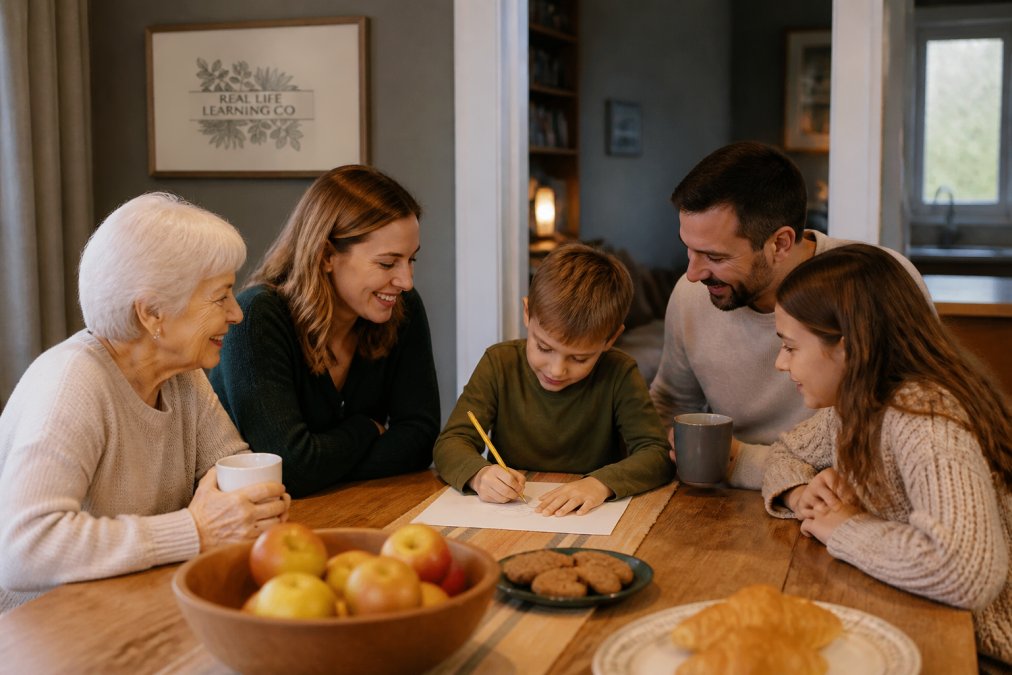
Dinner table gratitude. Before or after eating, each person shares one thing they’re grateful for.
What makes rituals stick:
- They happen at the same time each day or week
- They take less than five minutes
- Everyone participates, even if just listening
- You do it even when you don’t feel like it (especially then)
- You keep it simple enough to do on hard days
When Kids Resist: Troubleshooting Common Challenges
Not every child jumps into gratitude practice with enthusiasm. Resistance is normal. Here’s how to handle common pushback.
If your child has anxiety, depression, or trauma, gratitude practice alone isn’t enough. It can be part of healing, but professional support matters too. Don’t use gratitude as a substitute for help they might need.
Modeling Gratitude: What Children Learn From You
The most powerful gratitude teacher in a child’s life is watching you do it.
Kids notice:
- When you thank someone for small things
- When you point out something beautiful
- When you admit a mistake and feel grateful for a second chance
- When you pause and say what you appreciate about your day
- When you express gratitude for your child specifically
Ways to model gratitude:
- Thank your partner out loud for things they do
- Tell your kids specifically what you appreciate about them
- Name one good thing that happened in your day, even on hard days
- Say thank you to service workers, teachers, and people who help you
- Admit when you’re struggling, then notice something you’re still grateful for
- Show that gratitude doesn’t mean everything is perfect
Frequently Asked Questions
What’s the best age to start a daily gratitude practice with children?
You can begin introducing gratitude concepts as early as age 2 or 3 with simple language and concrete examples. Toddlers respond well to pointing out things they enjoy: ‘You love that toy!’ or ‘That snack tastes yummy.’ Around age 4 or 5, children can participate in basic gratitude prompts. School-age children can engage more deeply with journaling and reflection. The key is matching the practice to your child’s developmental level rather than waiting for a specific age.
How long does a daily gratitude practice for young children actually take?
Most daily gratitude practices take 5 to 10 minutes. A simple dinner table conversation, a quick bedtime reflection, or a few minutes with a gratitude journal fits easily into existing routines. Start small, even 3 minutes of intentional thankfulness can become meaningful. The goal is consistency over length. Many families find that weaving gratitude into activities they’re already doing (meals, bedtime, car rides) makes it sustainable without adding another task to your day.
What should I do if my child doesn’t want to participate in gratitude activities?
Resistance is normal and doesn’t mean the practice isn’t working. Try shifting the approach: instead of a formal journal, have a casual conversation. Let them draw or act out things they’re grateful for instead of writing. Avoid forcing participation or making it feel like a chore. Sometimes stepping back for a week and trying again later works better than pushing through. You might also model gratitude aloud for your own experiences, which children often absorb naturally without pressure.
Can a daily gratitude practice help with emotional growth and resilience in children?
Regular gratitude practices can support emotional growth and perspective-taking in children. When kids notice things they appreciate, they may develop a more balanced view of challenges. Gratitude can complement other emotional-learning tools. For some children, a consistent practice helps them build self-regulation and notice positive moments.