
Table of Contents
- Why Simple Life Skills Matter More Than Extra Worksheets
- Age-Appropriate Chores for Elementary Students: A Room-by-Room Starting Point
- Teaching Emotional Intelligence to Kids Through Everyday Moments
- Practical Money Lessons for Children: Coins, Choices, and Waiting
- Problem-Solving Activities for Kids That Fit Into a Normal Tuesday
- Communication, Focus, and Hygiene: Three Skills That Quietly Hold Everything Together
- Conclusion
- Frequently Asked Questions
Last Updated: September 17, 2026
Why Simple Life Skills Matter More Than Extra Worksheets
Simple life skills for elementary students are the everyday abilities kids use to handle themselves, their feelings, and their responsibilities at home and beyond. These small, repeated moments build far more than a worksheet ever could.
Think about what a worksheet teaches: one right answer, on one page, for one subject. Now think about what happens when your eight-year-old packs their own lunch, notices a friend looks sad, and decides to share a snack. That single morning touches planning, empathy, and decision making at once.
Kids learn these skills by doing them, not by reading about them. The good news?
Age-Appropriate Chores for Elementary Students: A Room-by-Room Starting Point
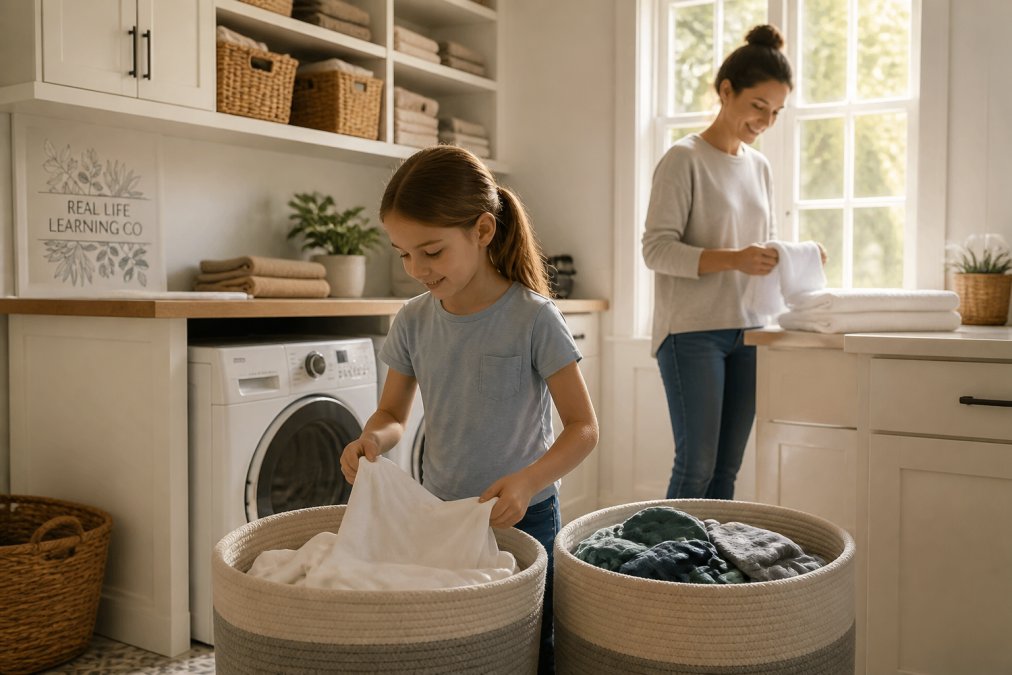
Age-appropriate chores for elementary students are tasks matched to a child’s coordination and attention span, not just their age. A kindergartner can sort socks; a fifth grader can run a load of laundry.
- Kitchen: wipe counters, set the table, unload the dishwasher
- Bedroom: make the bed, put laundry in the hamper, clear the floor
- Bathroom: hang the towel, put toothbrush away, wipe the sink
- Living room: pick up toys, fold throw blankets, sort mail
- Laundry room: match socks, fold towels, carry their own basket
Chores by Age Band: Kindergarten Through Fifth Grade
Use this as a rough guide, not a rulebook. Every child develops at their own pace.
Age Band | Chore Examples | What It Builds |
|---|---|---|
K-1st grade | Put toys away, feed a pet, match socks | Following simple directions |
2nd-3rd grade | Set the table, water plants, sort laundry | Task management, sequencing |
4th-5th grade | Run laundry, take out trash, prep simple snacks | Independence, responsibility |
Teaching Emotional Intelligence to Kids Through Everyday Moments
Teaching emotional intelligence to kids works best in the moment, not in a lesson. When your child melts down over a lost game piece, that’s the classroom.
Naming Feelings Without a Lecture
Skip the speech. Offer a word instead.
- “You look frustrated. That puzzle was tricky.”
- “I hear you. It’s disappointing when a plan changes.”
- “Your face says you’re nervous about tomorrow.”
For families who want a structured way to build this habit, a simple daily check-in can give kids a place to name feelings without a parent hovering. My Daily Journal 2.0 offers such a resource.
Practical Money Lessons for Children: Coins, Choices, and Waiting
Practical money lessons for children start with three ideas: counting, choosing, and waiting. Real coins and real choices teach faster than any app.
Try this on your next grocery run:
- Give your child a small budget for one item.
- Let them compare two brands and pick.
- Hand the cashier the money and count the change together.
Problem-Solving Activities for Kids That Fit Into a Normal Tuesday
Problem-solving activities for kids don’t need a special setup. They need a real problem with more than one possible answer, and a parent willing to slow down instead of swooping in.
- Name the problem. “The library is closed today.”
- Brainstorm three options. Even silly ones count, silly ideas loosen up thinking.
- Predict what happens next. “If we go tomorrow, we miss the return deadline.”
- Pick one and try it.
- Check in afterward. “How did that work? What would you change?”
Everyday Problems You Can Hand Over
- The broken routine: “The library is closed today. What’s our backup plan?”
- The missing ingredient: “We’re out of eggs. What could we use instead?”
- The stuck zipper: “This is jammed. What do you want to try first?”
- The sibling standoff: “You both want the same seat. How can we solve this fairly?”
- The lost library book: “It’s not on the shelf. Where else could it be?”
- The too-small backpack: “Everything won’t fit. What has to go?”
Then step back. Resist the urge to solve it for them. Ask “What have you tried?” before offering anything.
Conflict Resolution Scripts Kids Can Actually Use
Peer disagreements are the most common real-world problem elementary kids face, and most articles skip the actual words. Give your child a few scripts to try:
- When they want a turn: “Can I have it when you’re done? I’ll wait.”
- When they feel left out: “I’d like to play too. Can I join this round?”
- When something feels unfair: “I don’t like it when you grab it. Please ask first.”
- When they need a break: “I need a minute. I’ll come back.”
- When they’ve made a mistake: “I’m sorry I did that. What can I do to make it better?”
Jumping in too fast teaches kids that problems get solved by someone else. Let them sit in the discomfort for a minute, even when you can see the answer.
A child who has a script for a hard moment doesn’t have to invent one in the middle of it. That’s the whole point of practice.
Explore Real Life Learning Co →
Communication, Focus, and Hygiene: Three Skills That Quietly Hold Everything Together
These three skills rarely get headlines, but they carry a lot of weight. A child who can speak up, finish a task, and take care of their own body moves through the day with far less friction. They’re also the skills that look different for every child, and that’s fine.
Communication Skills Grow Through Reps
Communication isn’t taught; it’s practiced. Give your child small, low-stakes chances to speak for themselves:
- Order their own food at a counter
- Ask a librarian where to find a book
- Call a grandparent and share one thing about their day
- Return an item to a neighbor with a thank-you
Focus and Self-Control: Short Beats Long
Focus builds through short, repeated stretches, not long ones. Try a ten-minute “quiet work” block before screen time. Keep it short enough that your child succeeds, then extend by two minutes once ten feels easy.
A few things that help focus land:
- A visual timer they can see counting down
- One task on the table at a time
- A movement break before, not after, the hard part
Personal Hygiene: Routine Beats Reminders
Hygiene sticks when it’s built into a routine, not nagged into place. A simple morning and bedtime checklist taped to the bathroom mirror works better than repeated reminders. Let your child check the boxes themselves, the ownership is the point.
Everyday Digital Safety Habits
Digital literacy belongs on this list now. Kids need to know how to handle screens safely, and that starts with a few clear habits:
- Ask before clicking a link or downloading anything
- Keep personal details like address and school private
- Tell a trusted adult if something feels weird or unkind online
- Take a screen break when a game or video gets intense
- Pause before replying to something that made them angry
Adapting These Skills for Different Learners
Every child learns differently, and some children may benefit from additional structure, visual supports, smaller steps or more transition time. If a routine isn’t working, experiment with the support around the skill rather than assuming the child simply isn’t trying.
A few adjustments that help:
- Break it into smaller steps. “Get ready for bed” becomes four separate jobs: pajamas, teeth, bathroom, book.
- Make it visual. A picture checklist on the wall beats a verbal reminder every time.
- Front-load the transition. Give a five-minute warning before switching activities.
- Reduce sensory load. If the bathroom fan is overwhelming, that’s a real barrier, not an excuse.
- Celebrate the attempt, not just the finish. Effort is the skill you’re building.
If a routine keeps breaking down, the routine is usually the problem, not the child. Shrink it until it works, then build back up.
Conclusion
The skills that matter most for elementary kids rarely come from a workbook. They come from chores, conversations, small budgets, and problems solved together on an ordinary Tuesday. Pick one area from this list and start there this week. Keep it small, keep it steady, and let your child do the doing. If you’d like ready-made prompts and daily check-ins to make it easier, explore the Real Life Learning Guide and the My Daily Journal 2.0 from Real Life Learning Co.
Frequently Asked Questions
What are the most important life skills for elementary students to learn?
Focus on a small set that carries the rest: basic self-care like handwashing and packing a bag, simple household chores, naming and handling feelings, counting and saving money, and solving small problems without an adult stepping in first. These build independence and responsibility at an age when kids still enjoy helping. Pick two or three to practice this month rather than all of them at once, and let your child repeat them until they feel routine.
How can I teach life skills without adding more schoolwork?
Attach the skill to something you already do. Let your child count change at the store, sort laundry, set the table, or plan a Saturday outing with a small budget. Real-world practice sticks better than a worksheet because the result is visible. A short daily journal can help your child reflect on what they tried, but the learning happens in the kitchen, the car, and the checkout line.
What are some age-appropriate household responsibilities for elementary kids?
Kindergarten and first grade can handle putting toys away, feeding a pet, and matching socks. Second and third grade can set the table, water plants, and sort laundry. Fourth and fifth grade can take out trash, sweep, make a simple breakfast, and manage a weekly chore without reminders. Match the task to your child’s actual abilities, not just their age, and adjust as they grow.
How do life skills contribute to a child’s emotional development?
Every skill a child practices gives them one more moment of handling frustration, waiting, or fixing a mistake on their own. That is where resilience and self-control grow. Naming feelings during a chore that goes wrong, or celebrating a small money saving, teaches emotional intelligence in context. Over time, kids learn they can manage hard moments, which supports confidence and a steadier sense of self.